Computational media research · UC Santa Cruz
StimScapes
How can computational media support stimming rather than treating it as behavior to suppress?
In brief
Under Professor Kate Ringland and PhD mentor Yihe Wang at UC Santa Cruz, I worked with two other high-school interns to study neurodivergent-led media practices. We asked what online stimming content could teach designers about building computational tools that support—rather than suppress—self-regulation and sensory expression.
A quieter view
Calm Mode softens the page with slow color and shape.
Method overview
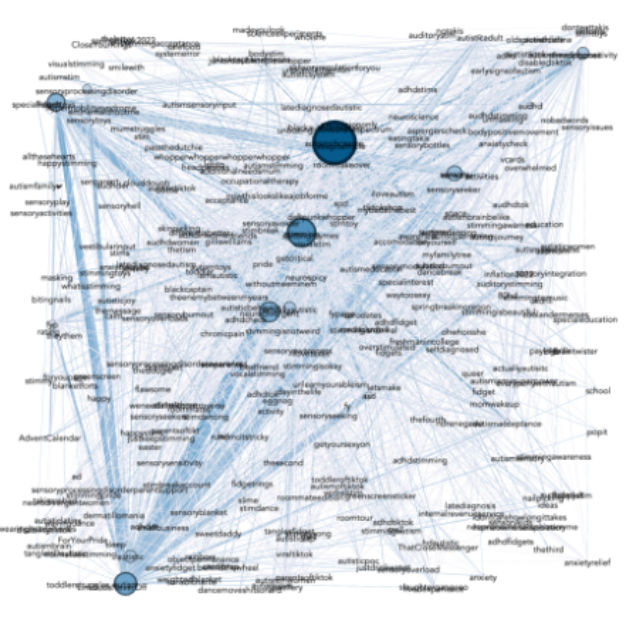
Hashtag network workflow
20,523 videos
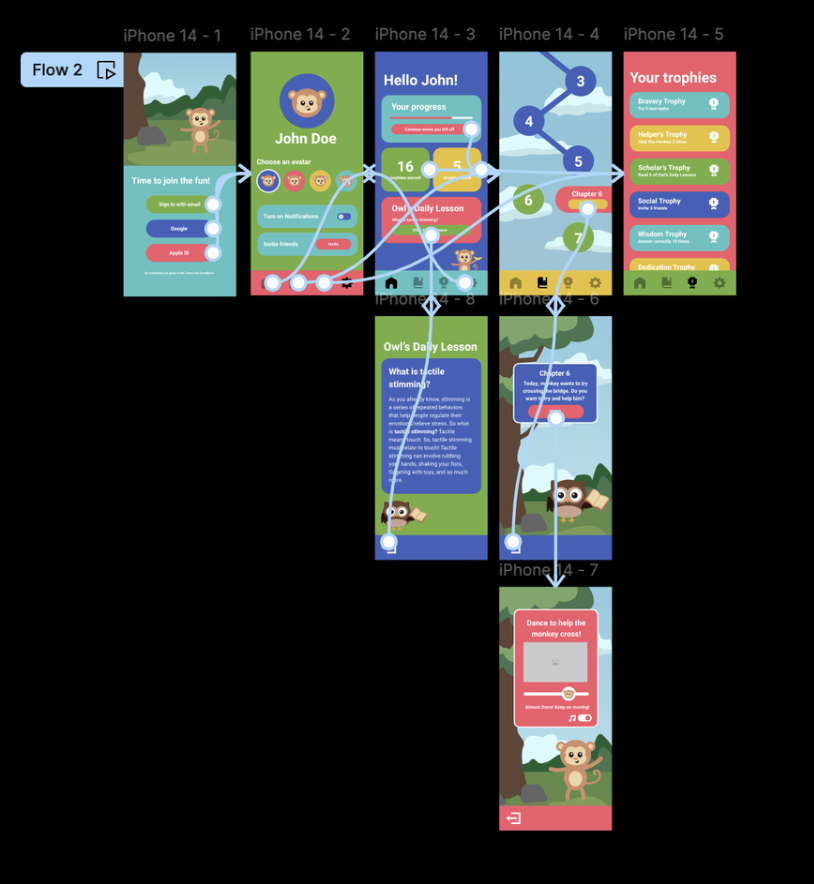
Prototype walkthrough
What I did
- 01Collected 20,523 TikTok videos from 73 neurodivergent creators, then extracted and parsed 505 hashtags into a network of recurring themes.
- 02Compared hashtag co-occurrence with BERT-based semantic similarity, built pairwise similarity matrices, and used spectral clustering to optimize and evaluate thematic groups.
- 03Coded videos in Dovetail by stimming type, content, and portrayal method, then translated the quantitative and qualitative findings into design principles and a Figma game prototype.
Key finding
Common content centered on vestibular, proprioceptive, and tactile stimming; information and practical tools; and multisensory presentation through demonstration and music. Across the analysis, three design priorities recurred: self-acceptance, support for varied preferences, and clear educational context.