Research · Princeton University
Design Wind CRIP
What good is a climate model if the people designing buildings cannot actually use it?
Read the IEEE publicationIn brief
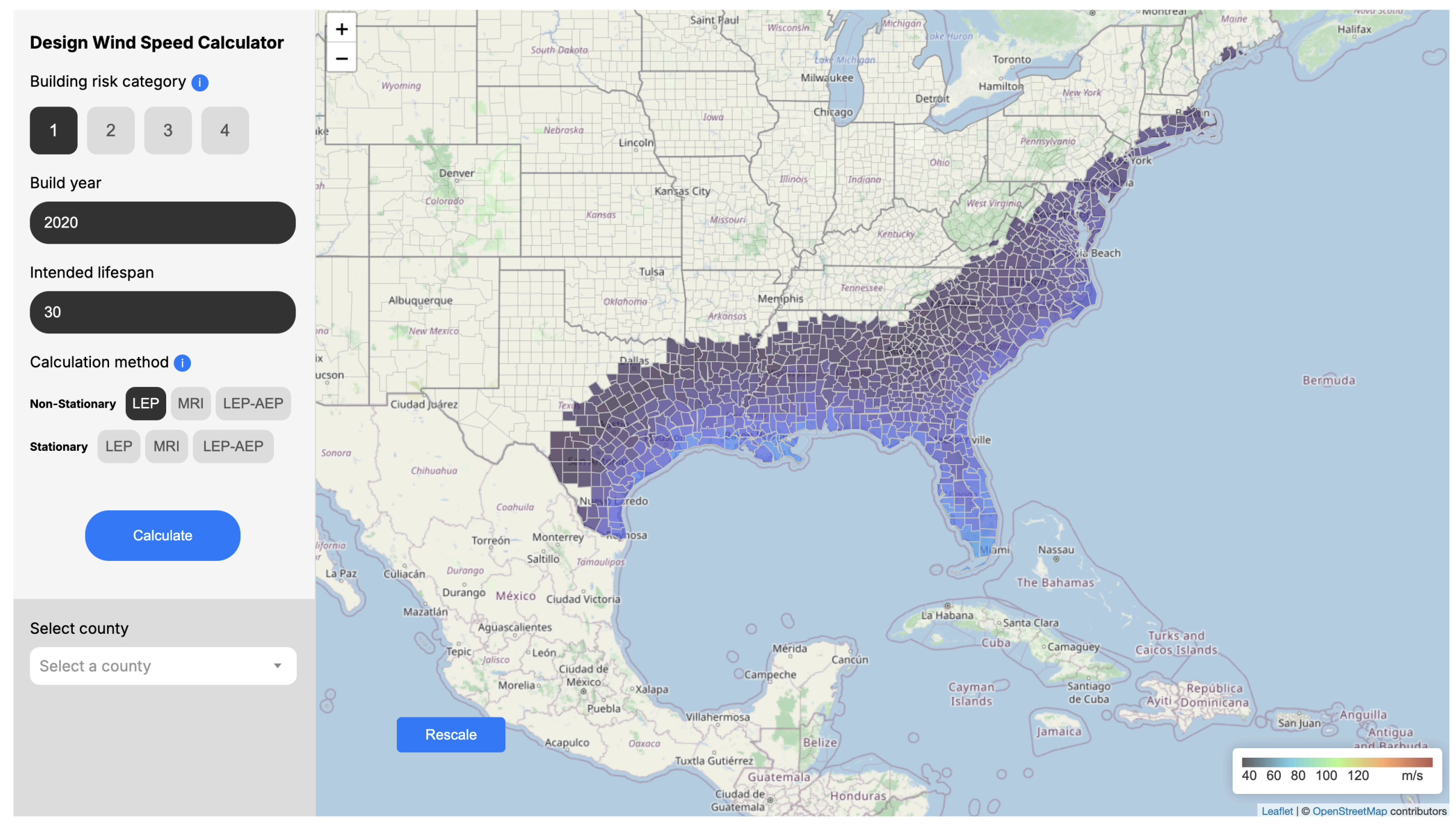
Building wind standards are still largely based on historical data and the assumption that extreme-wind risk stays constant over time. Researchers had already developed non-stationary models for a changing climate, but the methods lived in papers and code—not in a form most engineers, policymakers, or communities could readily use. I built Design Wind CRIP to close that gap: a county-level interface that turns climate-risk research into specific design wind speeds. The work was presented at an IEEE conference and published through IEEE Xplore.
Wind-test the page
Still · 0 mph. The page is operating under stationary assumptions.
What I did
- 01Translated probabilistic research using synthetic tropical-cyclone data and non-stationary climate projections into a usable calculation workflow.
- 02Built the front end in HTML, CSS, and JavaScript and a Flask/Python back end that executed R models on demand.
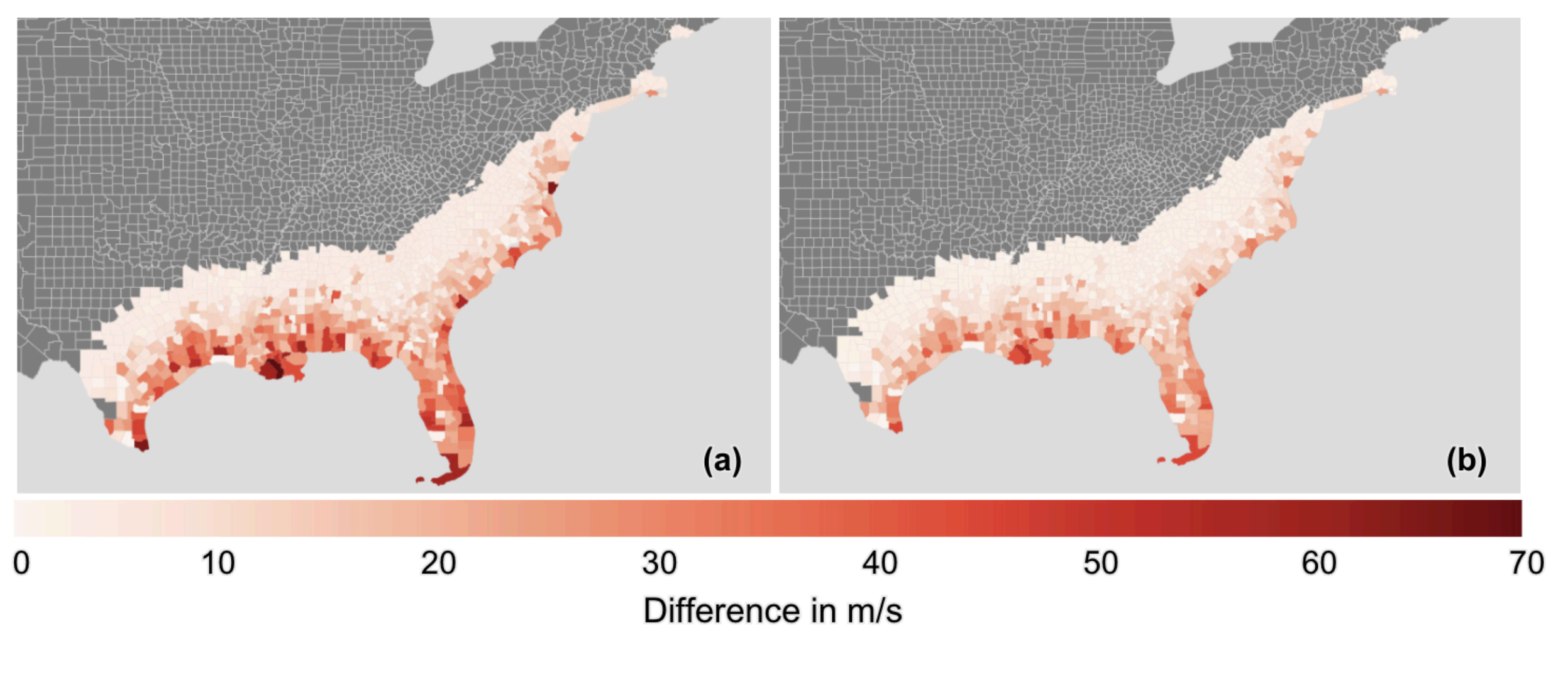
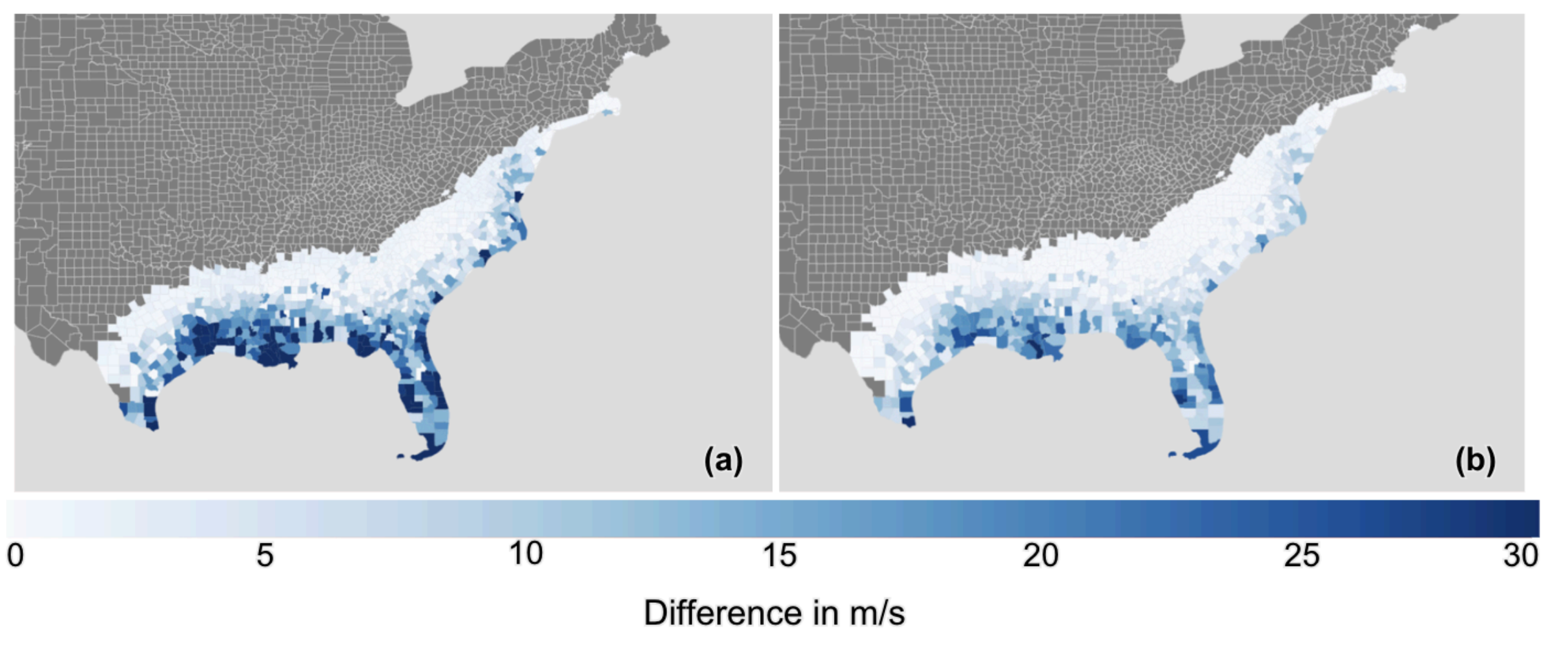
- 03Let users vary building risk category, construction year, lifespan, and calculation method, then compare stationary and non-stationary results against ASCE guidance.
Key finding
For extended-lifespan structures, the non-stationary LEP-AEP estimates were 37.8% higher than ASCE guidance on average—and as much as 116% higher in some coastal counties.
Recognition
- Presented at the IEEE MIT Undergraduate Research Technology Conference
- Published through IEEE Xplore