Data modeling · Public health policy
Broadband & Health Outcomes
Which parts of broadband access matter most for health: availability, affordability, or speed?
Read the paperIn brief
With a partner, I built a county-level dataset connecting broadband availability and price with measures including life expectancy, child mortality, diabetes, drug-overdose mortality, food insecurity, and insurance coverage. The goal was not simply to ask whether internet access matters, but to identify which parts of access were most consistently associated with health outcomes.
Tune the connection
No connection. Digital care, information, and services remain out of reach.
What we did
- 01Combined the FCC’s 2023 National Broadband Map and Urban Rate Survey with 2023 County Health Rankings, standardizing county identifiers, service types, speeds, and provider data.
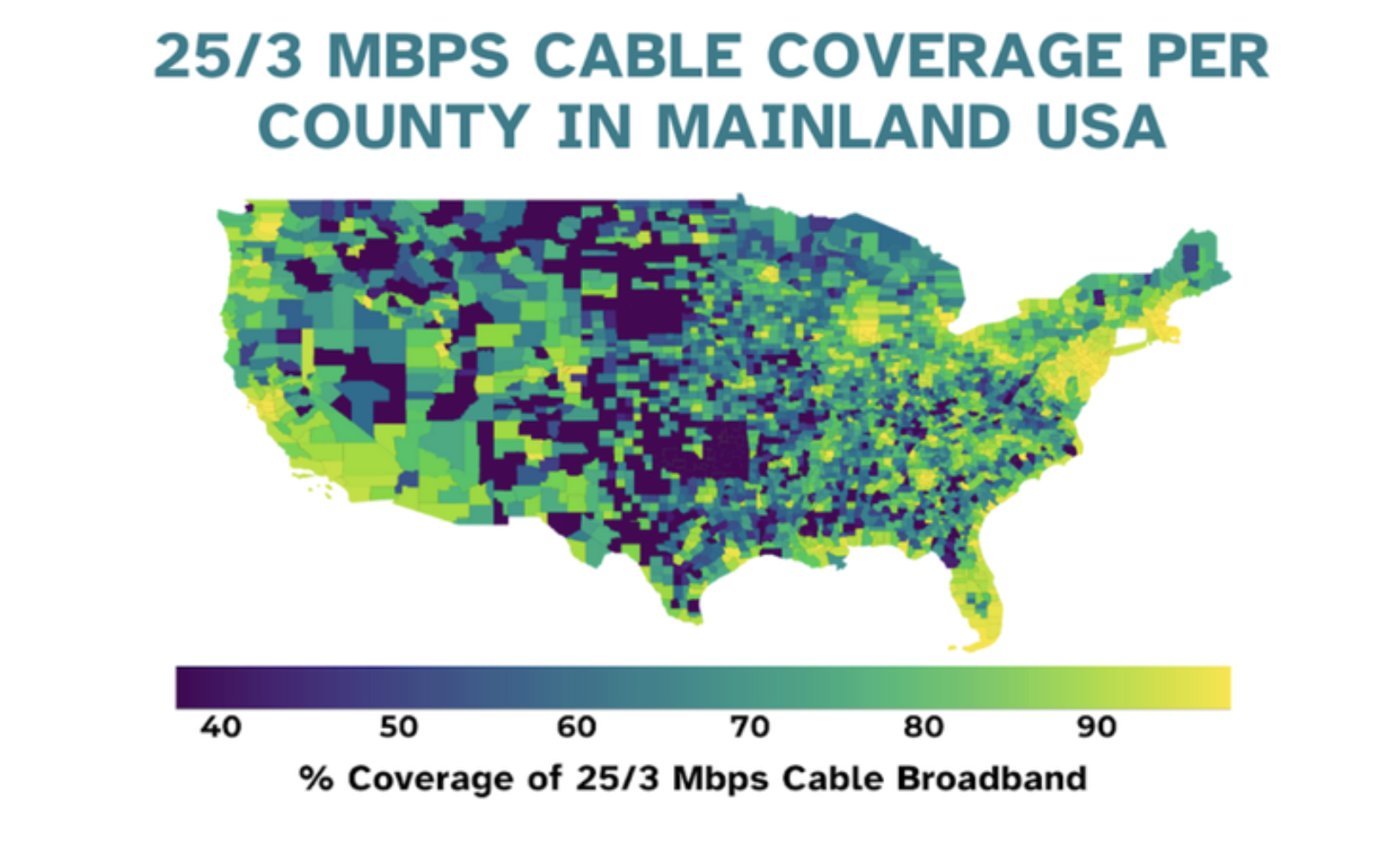
- 02Estimated coverage by technology and speed, then constructed an affordability measure based on the share of a county served by plans below $50 per month.
- 03Ran ordinary least squares models across multiple health outcomes and interpreted predictors using significance, direction, and model fit—while accounting for low R² values, self-reported FCC coverage, and assumptions in the affordability calculation.
Key finding
Overall household broadband access was a recurrent significant factor across six health outcomes. Low-price coverage also appeared repeatedly, while speeds above the 25/3 Mbps baseline showed less consistent additional association.